
What happens when vapour escapes from a breather valve?
Understanding airborne exposure, H codes, flashpoint, dispersion and verified leak rate evidence.
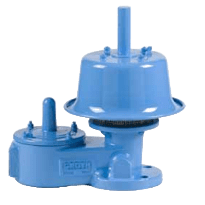
A breather valve is fitted to a tank or digester to help protect it from pressure and vacuum conditions. It allows the vessel to breathe safely during normal operation. But there is one important question that is often missed: What happens if the breather valve leaks?
If the valve does not seal correctly, vapour from the stored media may escape into the air. That vapour may not be visible. It may not always smell. It may not be obvious to people working nearby. But once vapour enters the air, it can become a safety, health, environmental and compliance concern.

Fire Risk
Could escaping vapour reach an ignition source and create a fire?

Inhalation Risk
Could workers breathe in harmful vapour?

Environmental Risk
Could vapour affect air quality, create odour complaints or cause wider environmental impact?
A leak becomes a risk when vapour enters the air

If the valve leaks
Vapour from the stored media may escape from the tank or digester into the surrounding air.

If the media is hazardous
That vapour may expose people, equipment, work areas, air quality and nearby communities.
Two questions every operator should ask
What is the media?
Use the SDS or MSDS to understand the H codes, flashpoint, vapour pressure, toxicity, inhalation warnings and environmental impact.
What is the leak rate?
Use verified testing to understand how much vapour may be escaping from the breather valve into the air.
What do H codes tell you?

H2 Physical Hazards
These relate to fire, explosion, pressure, oxidising, corrosion or reaction risks.
Airborne exposure relevance:
Vapour may ignite or explode if it reaches an ignition source.
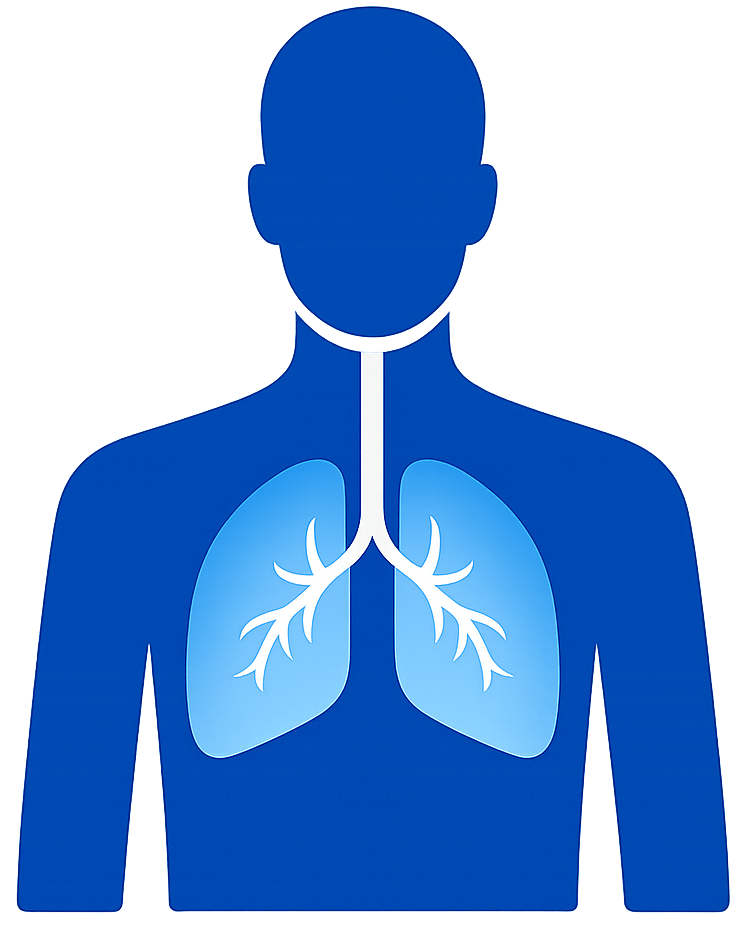
H3 Health Hazards
These relate to harm to people, including inhalation, skin contact, swallowing, irritation, toxicity or long term health effects.
Airborne exposure relevance:
Vapour may be breathed in by workers, contractors or nearby people.

H4 Environmental Hazards
These relate to impact on air quality, wider environmental risk, odour, off-site concern and secondary airborne pathways.
Airborne exposure relevance:
Vapour may affect air quality, deposit elsewhere or move off-site.
How vapour exposure can happen
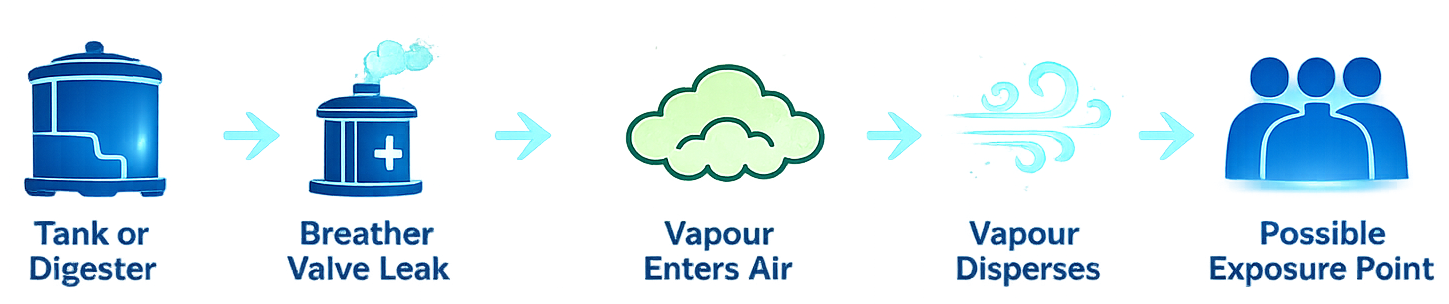
Flashpoint explains ignition risk, not the full exposure risk

Flashpoint is the lowest temperature where a liquid gives off enough vapour that it could ignite if there is a spark, flame, hot surface or other ignition source nearby.
Flashpoint does not mean the liquid only starts giving off vapour at that temperature. Some liquids can release vapour before they reach their flashpoint.
The key question is:
Could vapour escaping from the breather valve enter the air and reach an ignition source?
Myth
Vapour only matters at flashpoint.
Reality
Vapour can be released before flashpoint, and inhalation or environmental risk may exist even when ignition risk is low.
Could someone breathe in enough vapour to be harmed?
| H Code | What it means |
|---|---|
| H330 | Fatal if inhaled |
| H331 | Toxic if inhaled |
| H332 | Harmful if inhaled |
| H333 | May be harmful if inhaled |
| H334 | May cause allergy, asthma symptoms or breathing difficulties if inhaled |
| H335 | May cause respiratory irritation |
| H336 | May cause drowsiness or dizziness |
Review together
Airborne vapour can also create environmental risk

Air Quality
Could vapour affect local air condition or create regulatory concern?

Odour Complaints
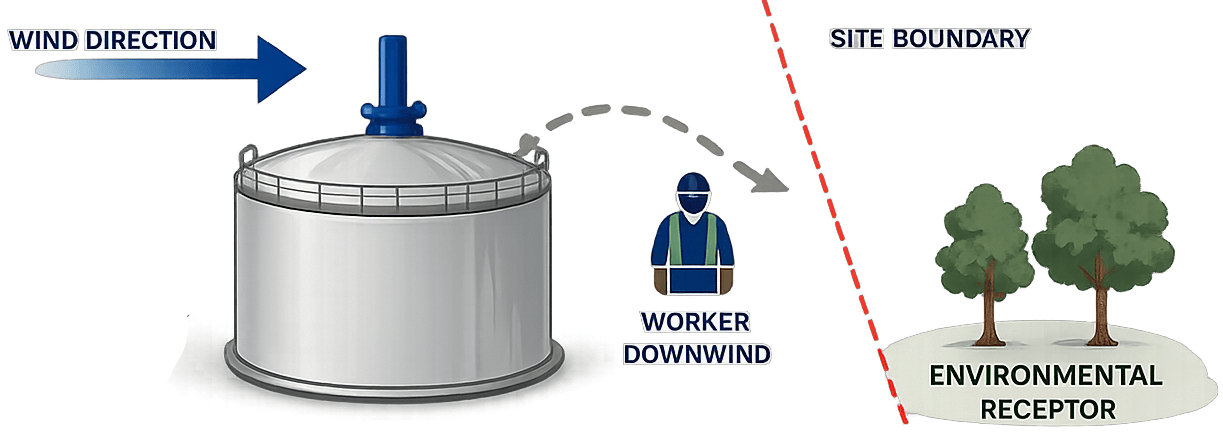
Could vapour travel beyond the site boundary and affect nearby communities?

Greenhouse Gas Emissions
Could the release contribute to emissions or climate impact?

Secondary Pathways
Could vapour settle, condense or move towards drains, work areas or soil?
Where does the vapour travel?
Why verified leak rate data matters
Without leak rate data
You may know the chemical is hazardous, but you do not know how much vapour could be escaping into the air.
You may have the valve replaced, but you do not know whether it is sealing effectively.
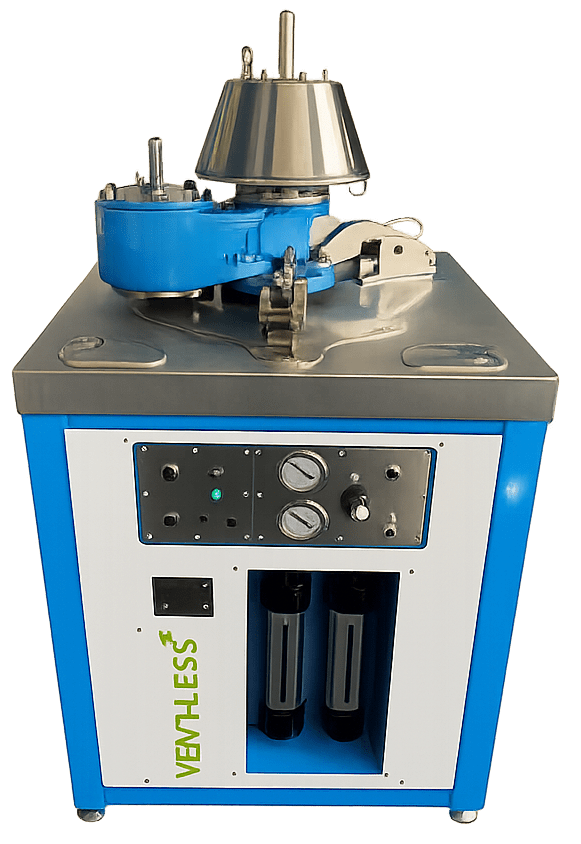
With verified leak rate data
You can assess the release, refine exposure pathways, support maintenance decisions and provide clearer evidence for compliance.

Vent-Less testing helps move the discussion from assumption to evidence.
What should operators review?
- SDS or MSDS
- H Codes and full hazard statements
- Verified breather valve leak rate
- Flashpoint
- Vapour pressure
- Workplace Exposure Limits
- Wind direction
- Wind speed
- Worker access
- Worker location
- Ignition sources
- Site boundaries
- Environmental receptors
- Valve maintenance history
- API 2000 or ISO 28300 test evidence